Vertical screen recording

Make a screen recording vertical without stretching it

Place your existing recording inside a 9:16 composition, keep the interface readable, and use the space around it for color instead of cropping away important content.

  • Source stays on your device
  • Choose the exact cut
  • Use your brand colors
Giflane output
Giflane.comVertical MP4Ready to publish9:16 · 1080 × 1920Auto layout
A real screen recording shown inside the same centered, branded composition Giflane exports.
Free browser editor

Create your vertical mp4 on this page

Choose your recording, select the exact moment, adjust the preset and export without leaving this guide. Your source video stays on this device.

Choose your screen recording

The recommended format, canvas and compression for this vertical mp4 are already selected, and every setting remains editable.

Your recording stays on this device. · Up to 5 minutes · 500 MB
See what you can make

Your recording. A better-looking result.

Loading example…

A real screen recording, framed and ready to share. Try it, change the colors, and make it yours.

Quick answer

How do you make a screen recording vertical?

Do not stretch the source. Put it on a 9:16 canvas, scale it until the interface remains readable, center it, and use a solid or gradient background around the recording. Giflane applies this layout automatically and exports the result as a vertical MP4.

Try it with your recording →
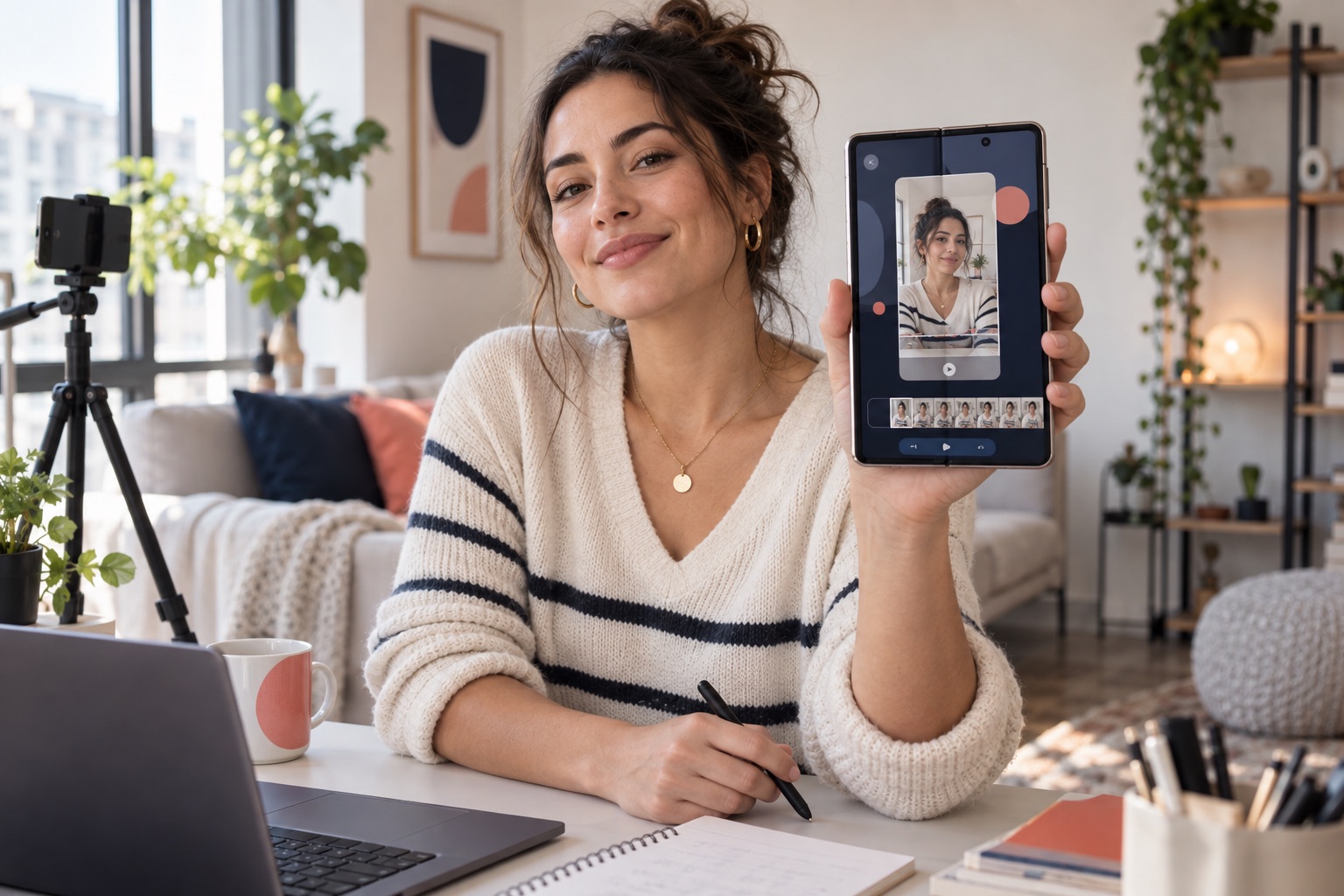
A content creator showing a polished screen-recording composition on an unfolded phone
Vertical without awkward cropping

Keep the interface visible and the result feed-ready.

A deliberate background and centered device turn a raw capture into a vertical clip people can follow.

Why this workflow works

One recording. One clear output.

01

No stretched interface

The original aspect ratio stays intact inside the vertical canvas.

02

Less accidental clipping

Flexible phone sizing protects buttons, labels, and the important screen area.

03

Space becomes design

Use the area around the recording for a brand color or subtle gradient.

04

Works with portrait and landscape

Orientation is detected from the upload and can still be changed manually.

Step by step

How do you make a screen recording vertical?

  1. 1

    Upload the original recording

    Use a portrait, landscape, phone, tablet, or desktop capture up to five minutes.

  2. 2

    Select a vertical destination

    Choose YouTube Short to switch the composition to 9:16.

  3. 3

    Check the crop

    Confirm that labels, navigation, and the pointer remain inside the frame.

  4. 4

    Choose the surrounding color

    Use a solid background for clarity or a restrained gradient for more depth.

  5. 5

    Export MP4

    Download the vertical H.264 video and add platform-specific audio or captions afterwards.

Practical defaults

Vertical screen-recording settings

These settings are a good starting point. Adjust them if your on-screen text is hard to read or the exported file is larger than you need.

DecisionRecommendedWhy
Aspect ratio9:16Fits vertical feeds and Short-style publishing.
FitContainPreserves the complete source instead of cutting off the interface.
BackgroundSolid or subtle gradientFills unused space without distracting from the screen.
GlowSoft or offAdds separation while keeping edges natural.
ExportMP4Better than GIF for longer vertical clips.
FAQ

Questions about this workflow

Can I make a landscape screen recording vertical?

Yes. Giflane fits it inside a 9:16 canvas and preserves the original aspect ratio.

Will the sides of my recording be cropped?

The default fit preserves the full recording. Check the preview before export, especially when status-bar cropping is enabled.

Can I choose a custom background color?

Yes. Use a preset, color picker, gradient, or colors extracted from a public website.

Should a vertical screen recording be GIF or MP4?

Choose MP4 for social video and longer clips. Use GIF only for a short silent loop on a page or in a message.

Your recording, finished

Turn the screen moment into something you can publish.

Use the editor on this page